

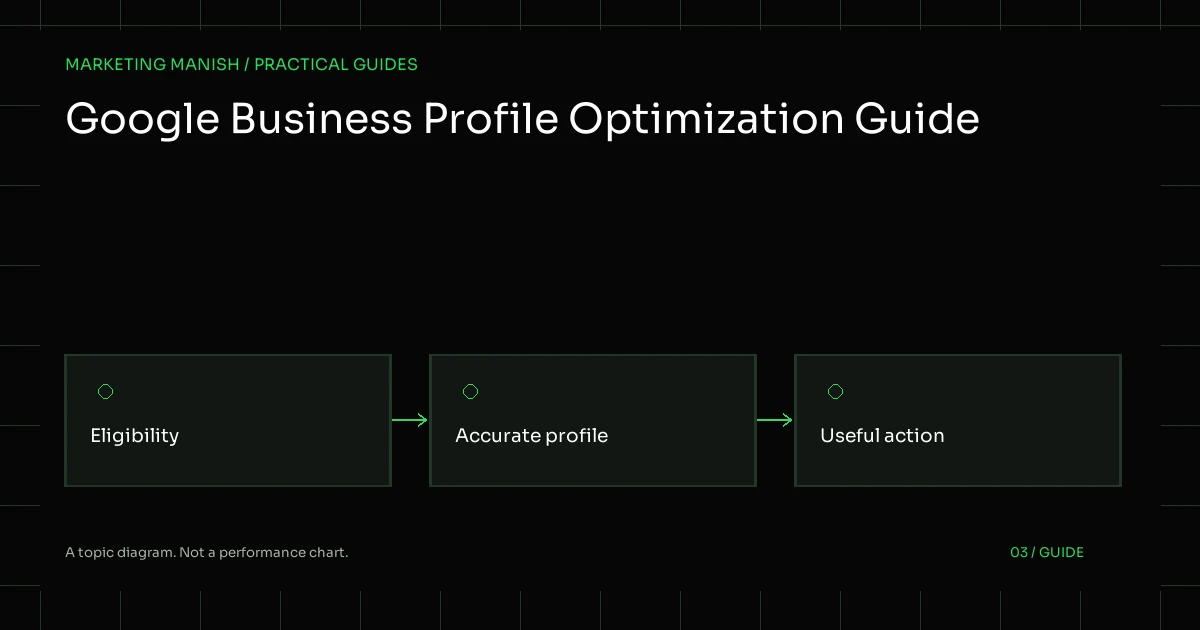
Google Business Profile optimization is the work of making an eligible profile accurate, useful and consistent with the business it represents. It is not a method for inventing a location or guaranteeing a map position. The profile should help someone decide whether the business can meet a real need and how to take the next step.
Begin with access and facts. Before changing a category or uploading a photo, confirm who owns the profile, what the business actually does and which details are approved. This guide describes a practical review process for an owner or their authorized marketer. Platform interfaces and policies can change, so use the current official guidance alongside the checklist.
Establish eligibility, ownership and a change record
Read the guidelines for representing a business on Google before creating or restructuring a profile. Different operating models can require different information. A customer-facing shop, a business that travels to customers and an entirely online service should not be treated as interchangeable.
The owner should retain appropriate control of the account and grant role-based access to a marketer. Avoid passing a shared password through email or an enquiry form. Record existing ownership, current details and any known verification issue so the work begins from an understandable baseline.
Use a change record with the field, old value, proposed value, reason and approval. This is especially useful when several people can edit a profile. It helps distinguish a deliberate correction from an unexplained change and reduces the risk of repeatedly reintroducing outdated information.
Review the real business name and location model
The name should reflect how the business is represented in the real world. Adding service keywords, city names or promotional claims to a name is not a substitute for relevance. Before correcting a name, confirm the owner’s actual branding and the platform’s requirements.
An address is a factual statement, not a targeting setting. Do not use an address merely because it would place the profile in a desirable area. Check whether customers can genuinely visit, whether the location is staffed as required and whether address visibility is appropriate for the operating model.
A hypothetical home-service business might need to describe where it travels without presenting a private address as a walk-in shop. A remote agency can explain coverage on its website without claiming local premises. These examples illustrate a decision process; they do not establish eligibility for a particular business.
Choose categories and services with restraint
Review categories against the business’s central activity. The best choice is not necessarily the broadest or most attractive phrase. It should help describe what the business is, while the service list explains the work it actually offers. Do not add unrelated services to capture queries the business cannot satisfy.
Prepare service descriptions in plain language. State the purpose, relevant limitations and what someone should ask next. If the service has eligibility conditions or depends on an inspection, make that clear. Avoid unverified superlatives, guarantees or claims of certification.
Compare the profile’s service information with the website. If the website describes one offer and the profile another, the visitor has to resolve the contradiction. A local SEO review should identify that mismatch and assign responsibility for the correction rather than editing each channel in isolation.
Make contact details and hours dependable
A correct contact number still needs a working response process. Confirm that calls reach the intended team and that people know how to handle enquiries generated from the profile. A number should not be changed just to satisfy a marketing tool without considering routing, ownership and continuity.
Opening information needs attention when the normal schedule changes. Decide who checks holidays, temporary closures or appointment arrangements. Avoid promising immediate availability if the business cannot support it. The same care applies to website links: send visitors to a relevant, functioning page rather than an unrelated promotional destination.
Test the journey on a phone. Follow the website link, read the service information and check the next action. If a form is used, verify that a valid submission reaches a protected enquiry system before depending on a notification email. Local discovery should connect to an operationally useful destination.
Use photos that explain the real business
Original imagery can show genuine products, the service process, public premises where they exist or practical preparation. Use only material the business has the right to publish, and obtain permission when people or customer work are identifiable. A photo should not imply an experience or location that is not real.
Do not fill an empty gallery with a stock team and present it as your staff. Do not create a fictional office scene merely to look established. If a suitable real image is not available, prepare a neutral informative graphic or wait until appropriate material can be collected.
Review image usefulness rather than only quantity. A clear product detail, a practical service explanation or an accurate entrance photo can answer a specific question. Give website versions descriptive alt text and sensible dimensions. The profile and the site should tell a compatible story.
Plan updates and answers around actual questions
Useful updates can explain a genuine service change, an approved offer or a practical topic customers ask about. They should not be scheduled solely to create the appearance of constant activity. Every update needs a clear purpose and an owner who can verify its details.
Where the platform provides question or messaging features, check their current availability and permissions before building a workflow around them. Features differ across accounts and can change. Do not promise a response channel that the business does not monitor or assume that an older tutorial describes the current interface.
Build a short library of approved answers for recurring questions. It can include service coverage, information needed before quoting and how appointments are arranged. Keep sensitive advice, private account matters and unusual situations on an appropriate human escalation path.
Request and respond to reviews ethically
A review process should invite honest feedback from genuine customers without incentives for positive sentiment. Avoid fake accounts, purchased reviews and selective public requests that exclude unhappy customers. The business needs useful feedback, not a fictional reputation assembled to support a marketing claim.
Write response principles before a difficult situation occurs. A good reply is calm, relevant and privacy-aware. It can acknowledge an issue and explain how to continue the conversation without publishing a customer’s contact details, order history or sensitive circumstances.
Actual policy violations can be reported through the platform’s process, but removal belongs to the platform. An online reputation service should not guarantee deletion of legitimate criticism. Feedback may also reveal a service problem that needs an operational fix rather than a more polished response.
Interpret performance without overclaiming
Profile activity can provide useful signals, but interactions are not automatically qualified enquiries or sales. Define the actions the business cares about and compare available platform data with website and enquiry records. Differences in measurement should be explained rather than hidden.
Keep a dated record of meaningful edits and broader business changes. When activity changes, consider seasonality, the offer, opening arrangements and other channels before attributing everything to a category edit or new photo. A single before-and-after screenshot is not enough to establish causation.
Broader SEO work can support the website’s usefulness and technical foundations. Coordinate it with profile maintenance so a person who discovers the business encounters accurate details throughout the journey.
Handle access changes and disagreements safely
Profile work sometimes reveals that a former employee, supplier or agency still controls access. Establish the legitimate owner and use the platform’s current ownership process. Do not create another profile or replace the business identity merely to avoid an access discussion. Keep the owner informed about what is known, what remains uncertain and what the platform needs to resolve.
When proposed changes involve business facts, the owner should be the source of truth. A marketer can identify an inconsistency, but should not guess a legal name, office arrangement or service limitation. Keep supporting material where appropriate and record approvals without copying passwords or sensitive personal documents into ordinary activity logs.
If a profile edit is rejected or an unexpected change appears, avoid a rapid sequence of unrelated edits. Review the notice, the current guidelines and the information that was submitted. A careful diagnostic step is more useful than claiming that a particular category combination or wording trick will bypass a platform decision.
Plan handover before it is needed. Document which profiles exist, who owns them, what work was completed and how management access can be revoked. This protects continuity if a provider changes and helps the business keep control of a channel that customers may rely on for practical information.
An owner’s final review checklist
- Eligibility and operating model have been checked.
- Ownership and marketer access are appropriate.
- Name, categories, services and contact details are accurate.
- Address visibility and service areas match reality.
- Hours and website links have been tested on mobile.
- Photos and updates are genuine and approved.
- Review requests are neutral and responses protect privacy.
- Results are reported with clear definitions and limitations.
Use this as a maintenance process rather than a one-time trick. If access, eligibility or the website journey is uncertain, request a free audit before expanding the work.